Put two 55+ community brochures side by side and the math looks obvious. Lakes of Mount Dora lists a flat $280 a month HOA fee. A comparable active-adult community forty minutes south, Del Webb Sunbridge in St. Cloud, lists monthly dues between $370 and $423 depending on the home series. On paper, Lakes of Mount Dora looks like the budget option by nearly $150 a month. That comparison is the one most buyers make in the car on the way home from touring both communities, and it is missing a line item that changes the answer.
What the $280 actually pays for
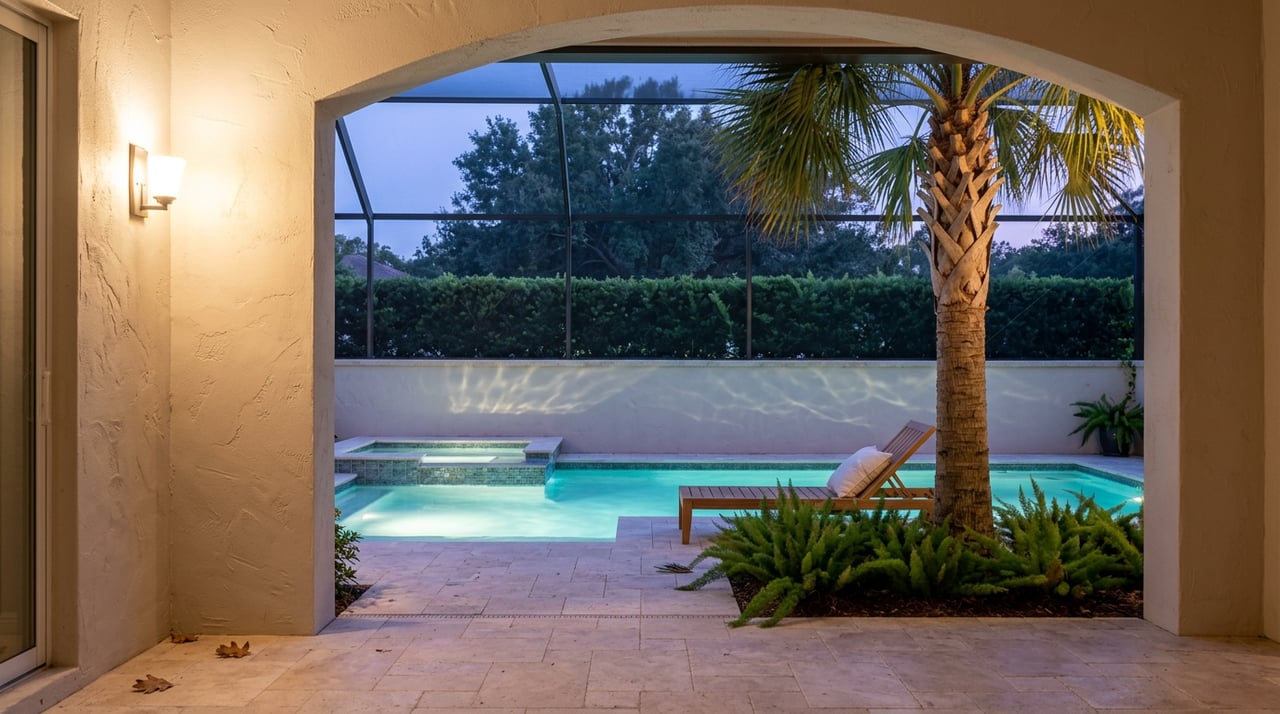
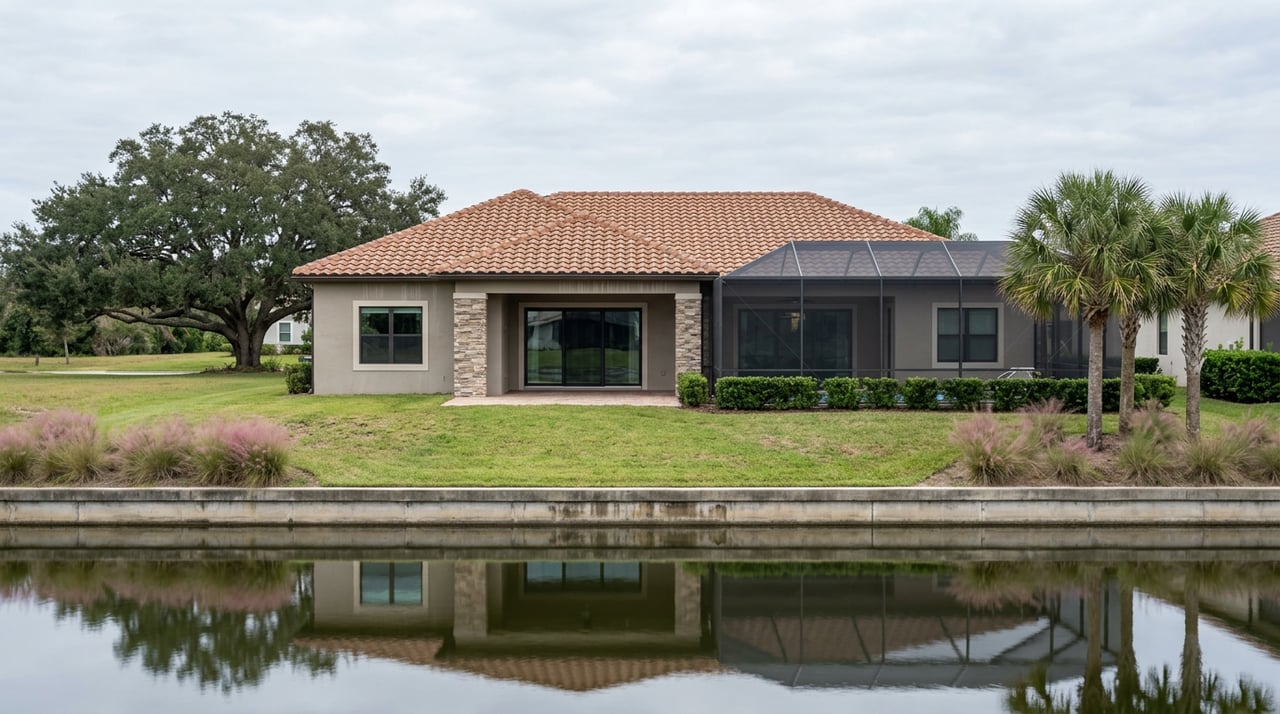
The Lakes of Mount Dora HOA fee recently ticked up five dollars, landing at $280 a month. That figure covers cable, high-speed internet, irrigation water for common areas, RV and boat storage, the on-site management company, and maintenance of the clubhouse and common grounds. It is a real bundle, and for a 55+ community built around an 18,000 square foot clubhouse and 4.5 miles of interconnected lakes, it is not a thin one.
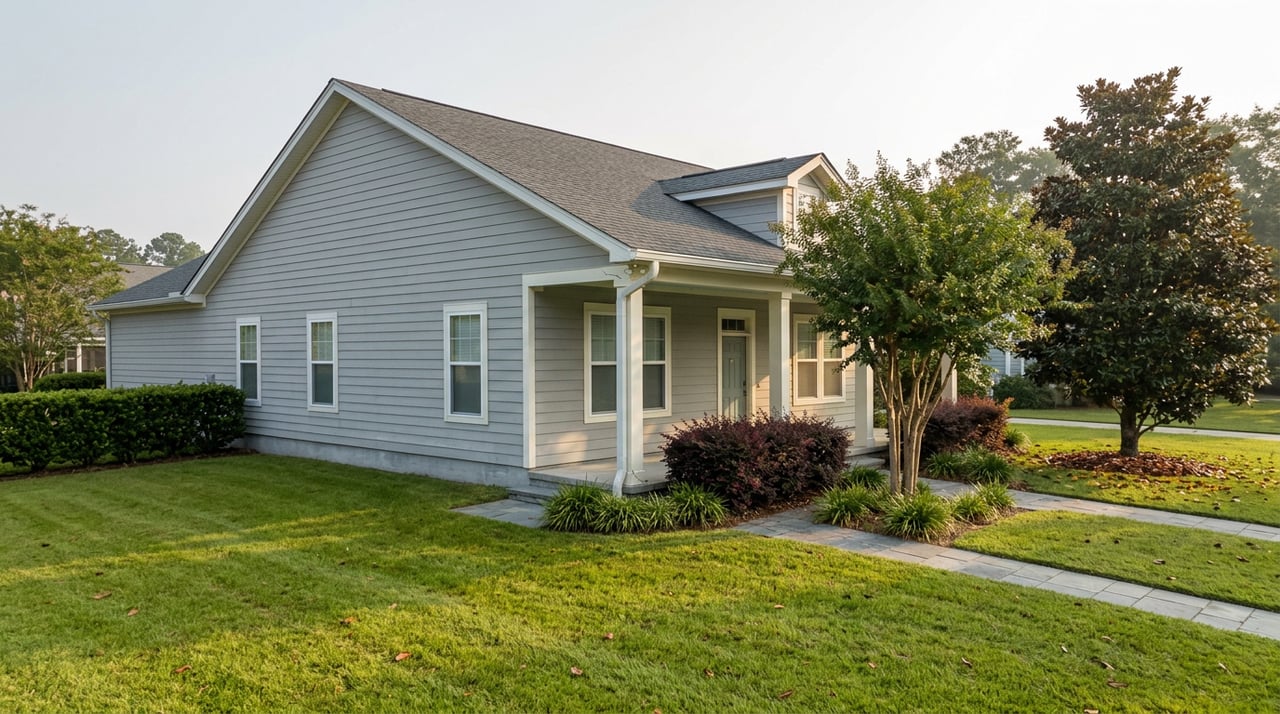
What it does not cover is your own yard. Lawn and shrub maintenance on individual homesites is not part of the HOA fee here. Residents either mow and trim it themselves or hire a local landscaping service, and that typically runs $70 a month and up depending on lot size and how much detail work you want.
That is the missing line item. And it is not a small one to leave off a brochure, because landscaping is usually the single largest recurring cost inside a 55+ HOA fee anywhere in Central Florida.
Why that matters against a bundled competitor
Del Webb Sunbridge builds landscaping directly into its HOA number. The $370 to $423 monthly fee there includes weekly lawn service during growing season, gigabit internet, and the full run of resort-style amenities. Homeowners do not choose a vendor or write a second check. It is baked in, which is exactly why the sticker number looks higher.
Line the two up honestly and the picture changes:
| Lakes of Mount Dora | Del Webb Sunbridge | |
|---|---|---|
| Advertised HOA | $280/month | $370 to $423/month |
| Includes lawn care | No | Yes |
| Typical lawn care add-on | ~$70+/month | Already included |
| CDD assessment | None | Yes, billed separately on the tax bill |
| Adjusted HOA-side total | ~$350+/month | $370 to $423/month, before CDD |
The gap between the two communities is real, but it is closer to $20 to $70 a month once you add landscaping back into the Lakes of Mount Dora number, not the $90 to $140 the headline figures suggest. And that comparison is still generous to Sunbridge, since its number still does not include whatever its CDD assessment adds on the tax bill side, a cost Lakes of Mount Dora does not carry at all. That is a meaningfully different picture than either community's marketing page shows, because each page is only reporting the shape of its own bundle.
Why the fee is built this way in the first place
This is not an oversight. Unbundling landscaping is a structural choice, and it cuts both ways for the person paying it.
Keeping lawn care outside the HOA fee lets Lakes of Mount Dora post a lower headline number, which matters in a market where buyers scan HOA dues the way they scan price per square foot: as a quick filter before they look at anything else. It also gives residents a choice a bundled fee does not. If you want a basic mow-and-edge service, you pay less than $70 a month. If you want a full-service landscaper who handles seasonal color, mulch, and shrub shaping, you pay more. Bundled communities like Del Webb Sunbridge remove that choice entirely and, in Sunbridge's case, require homeowners to use the HOA's contracted vendor exclusively.
There is no version of this that is simply better. It is a tradeoff between predictability and control, and the only way to make an informed choice is to know the tradeoff exists before you are three showings deep and mentally comparing a $280 number to a $423 number as if they were built the same way.
The other side of the ledger: the cost that runs the other way
There is a second cost that complicates this comparison, and it points in the opposite direction. Community Development District fees, usually just called CDDs, are a separate assessment that shows up on the property tax bill rather than the HOA statement, and they fund the roads, utilities, and amenities a developer built before turning the community over to residents.
Del Webb Sunbridge carries an active CDD assessment, billed separately through the tax bill rather than folded into that $370 to $423 monthly HOA figure. Twin Lakes, another St. Cloud active-adult community buyers in this price range often tour, carries one too, adding roughly $100 to $183 a month on top of its own HOA dues. Solivita, over in Polk County, layers on a CDD in the range of $67 to $150 a month, plus a separate monthly club fee.
Lakes of Mount Dora does not carry a CDD at all. So while its $280 HOA figure understates the true monthly cost by leaving out landscaping, Del Webb Sunbridge's higher-looking $370 to $423 figure understates its own true cost in a different way, by leaving out a CDD that lives on a different bill entirely. Both headline numbers are incomplete. They are just incomplete in opposite directions, which is exactly why comparing them at face value gets you the wrong answer twice.
There is also a one-time cost worth knowing about before closing day, not a monthly one. Lakes of Mount Dora collects a $1,000 capital contribution from the buyer at closing. It is a single payment into the association's reserves, not an ongoing fee, but it belongs in your closing cost math rather than your monthly budget math.
What to actually ask when you're comparing two communities
The fix here is not complicated, but it does require asking a slightly different question than the one most buyers ask. Instead of "what's the HOA fee," ask what the fee includes and what it leaves out. Specifically:
- Does the fee include lawn and shrub maintenance, or is that a separate vendor cost?
- Is there a CDD, and if so, what does the most recent property tax bill show for that line, not a builder's estimate?
- Is there a one-time capital contribution or initiation fee due at closing, separate from the monthly dues?
- If landscaping is unbundled, is there a required vendor, or can you choose your own service and price tier?
Ask a resident these questions if you can, not just a sales office. The actual invoice from someone already living there tells you more about the real monthly number than any brochure will.
Why this is worth the extra math
None of this changes whether Lakes of Mount Dora is the right fit for a given buyer. The clubhouse, the lakes, the resident-run clubs, and the proximity to downtown Mount Dora are their own reasons to choose it or not. What it changes is whether the HOA comparison you made in your head on the drive home is actually the comparison you think it is. A $280 fee sitting next to a $423 fee looks like a $143 monthly gap. Add landscaping back into the Lakes of Mount Dora side and a CDD onto the Sunbridge side, and that gap either shrinks to something closer to a rounding error or disappears entirely, depending on what Sunbridge's specific CDD assessment happens to be in a given year. Either way, the decision comes down to lifestyle fit rather than a dollar figure that was never measuring the same thing to begin with.
FAQ
Does the Lakes of Mount Dora HOA fee ever change? It can. The fee is currently $280 a month, up five dollars from the prior rate, which is typical for how HOAs adjust dues annually based on budget and reserve needs. Always confirm the current figure directly with the association or through the resale disclosure documents rather than relying on a listing that may not reflect the latest increase.
Is lawn care mandatory even though it's not in the HOA fee? Most 55+ communities, including this one, have architectural or maintenance standards that require yards to be kept up regardless of who does the work. The HOA fee not including lawn care does not mean lawn care is optional. It means you are choosing and paying for it separately.
How do I find out if a community I'm comparing has a CDD? Florida law requires CDD assessments to be disclosed to buyers, and the amount will appear on the property's tax bill. Ask for the most recent tax bill during your comparison, not a builder's projected estimate, since CDD amounts can shift as bonds are paid down.
If you are trying to run this math against your own specific list of communities, or you want help pulling the real numbers behind a listing you are already looking at, Scott Mcfadden can walk through the actual costs with you before you make an offer. Let's Connect.