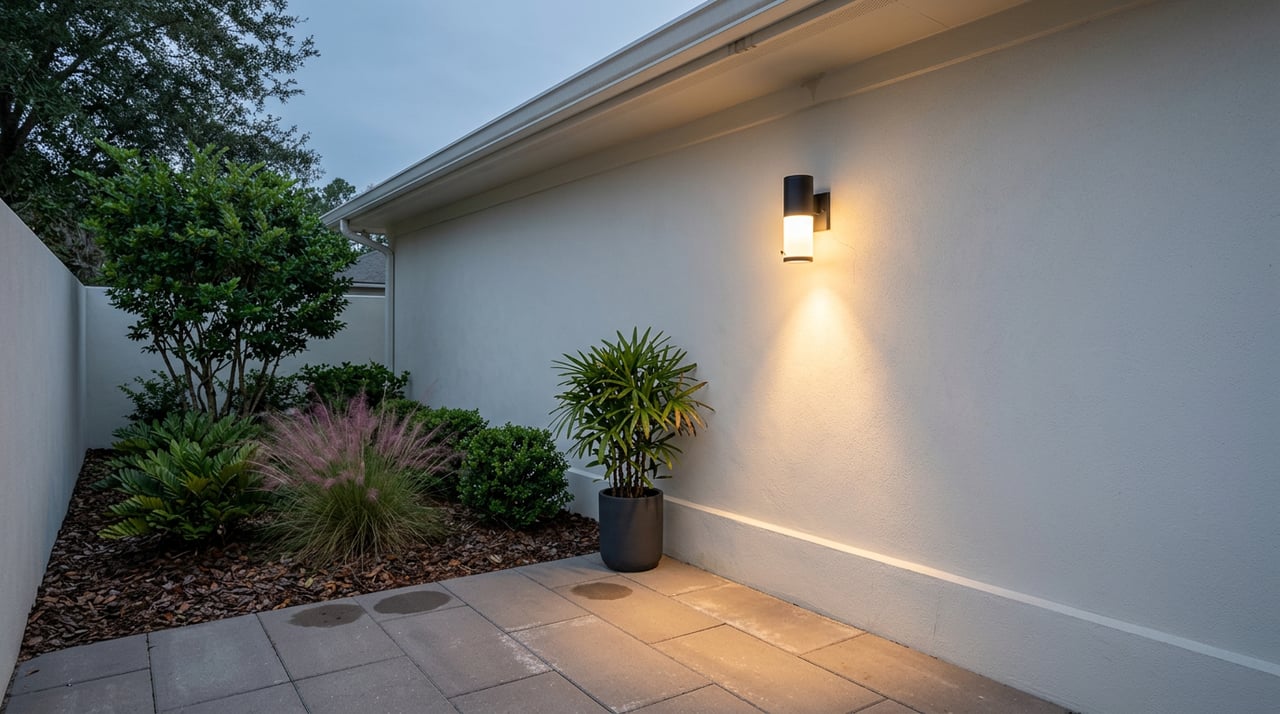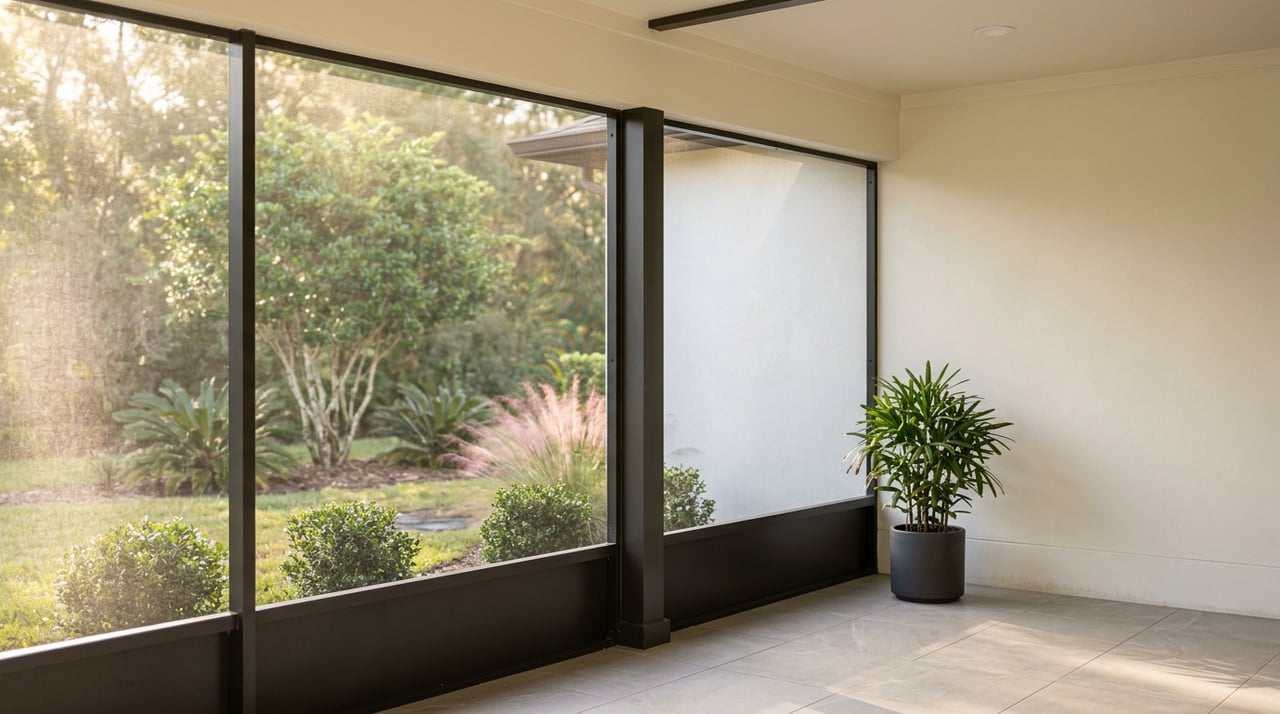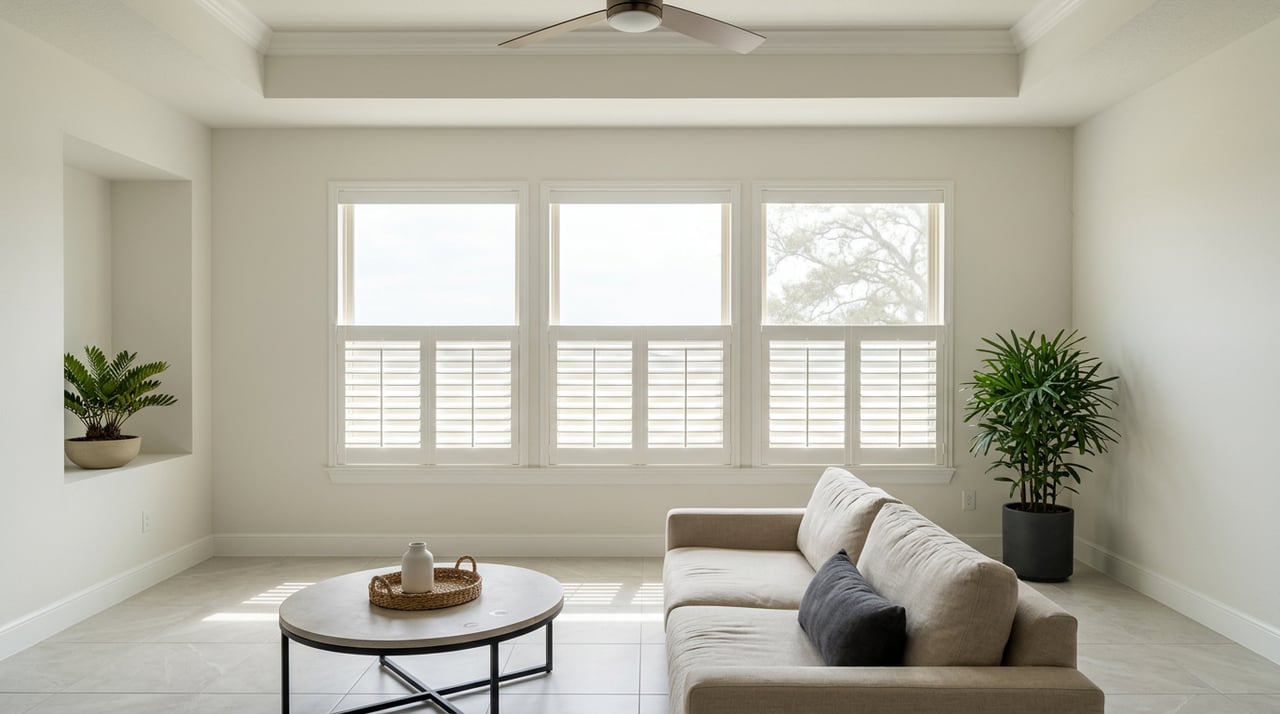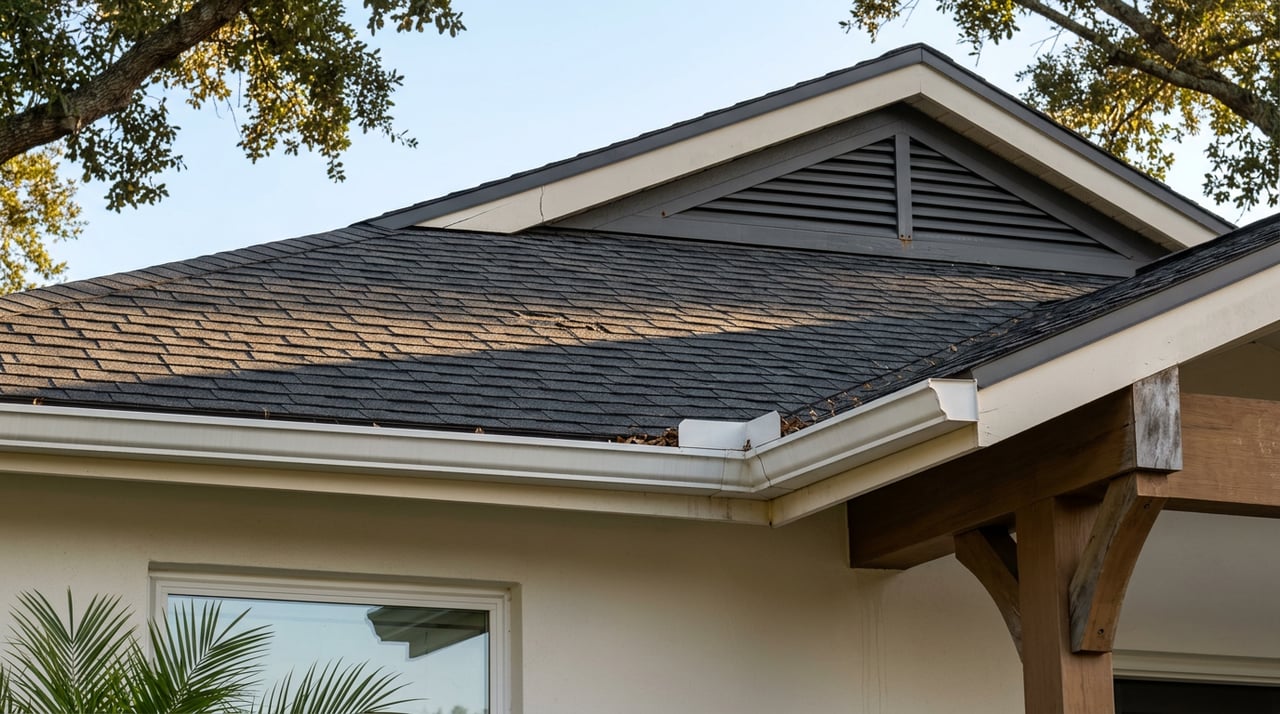
Two homes go on the market inside the gates this month. Same $280 HOA. Same clubhouse, same 4.5 miles of boatable water, same golf cart ride to the Country Club of Mount Dora. One was built by Pringle Development in the community's original phase back in 2006. The other just came off D.R. Horton's active construction rows, finished this year. A buyer scanning both listings side by side sees two nearly identical price tags and assumes two nearly identical purchases.
An insurance underwriter looking at the same two addresses does not see that at all.
Three builders, three decades, one gate
Lakes of Mount Dora reads on paper like a single, unified 55+ community. In practice it was built in waves. Pringle Development broke ground in 2006 and built the earliest phases. Medallion Home joined the project in 2011 and has been finishing out its remaining inventory homes since. D.R. Horton is the newest builder on site, and its Freedom Series sections are still under active construction this year, with move-in-ready homes listed alongside lots still framed out.
That build history matters more in 2026 than it did five years ago, because Florida's insurance rules attach real consequences to a home's age, and the calendar has just caught up with the community's oldest section.
Why this is the year the math changes
Florida's 2022 property insurance reform, Senate Bill 2-D, set a bright line at 15 years: insurers cannot refuse to write or renew a policy solely because a roof has crossed that age, but once it does, they can require the homeowner to pay for an inspection proving at least five years of remaining useful life before they'll bind coverage. Separately, most Florida carriers still ask for a full four-point inspection, covering roof, electrical, plumbing, and HVAC, once a home turns 20, a standard that predates SB 2-D and has held even as some carriers have started pushing that threshold back to 25 or 30 in the softer 2026 market.
Run those two thresholds against the community's build history and the timing lines up almost exactly:
| Builder | Construction began | Age in 2026 | Insurance milestone |
|---|---|---|---|
| Pringle Development | 2006 | 20 years | Typical four-point inspection age |
| Medallion Home | 2011 | 15 years | SB 2-D roof-age line |
| D.R. Horton | Ongoing, current phases | 0 to 3 years | Neither threshold in view |
The earliest Pringle-built homes turn 20 this year, the exact age where most insurers start asking for the four-point report. The first Medallion-built sections turn 15, the exact age where SB 2-D lets a carrier demand proof the roof has life left in it. D.R. Horton's newest rows aren't within a decade of either conversation.
What this looks like on an actual listing
This isn't a theoretical problem. It's already showing up in how sellers are marketing their homes.
One listing inside the community, a 2019 Medallion-built home, was recently advertised with a brand new 2025 roof, and the listing description says plainly that the replacement was done to help with insurance costs. That's a roof that was six years old, nowhere near either legal threshold, replaced anyway because the seller understood which way the market was moving.
Another listing, from one of the community's original owners, a Pringle-built home dating to the earliest phase, describes itself as one of the original residents of Lakes of Mount Dora and lists a new roof among its recent updates. That's a homeowner who lived through the 20-year mark and got ahead of it before listing.
Both examples point to the same underlying behavior. Owners in the older phases are not waiting for a failed inspection to force their hand. They're re-roofing proactively, which means the real question for a buyer isn't which builder put up the house. It's what the roof disclosure actually says.
The number that doesn't show up on the HOA line
Here's where the comparison gets interesting. Every listing in the community quotes the same HOA number: $280 a month, up $5 this year, with no CDD and a one-time $1,000 capital contribution at closing. Lawn and shrub care isn't included in that fee, which typically runs another $70 a month if a resident hires it out. That's the cost line every buyer sees, and it's identical whether the home was built in 2006 or last spring.
Insurance is the cost line that isn't standardized anywhere on the listing sheet, and it's the one that actually diverges by build year. A cost breakdown of Mount Dora housing published in May 2026 found a real gap between comparable homes of different vintages: a much older home with a roof approaching or past the 12-year mark was quoted between $4,800 and $5,800 a year for coverage, while a similarly sized 2010-era build with a six-year-old roof came in between $2,800 and $3,400. That's a swing of roughly $2,000 a year on homes that might list for the same price, sit on the same size lot, and carry the same HOA statement.
Inside Lakes of Mount Dora specifically, local roofing contractors treat the community differently from Mount Dora's historic downtown for exactly this reason. One contractor working the area describes the newer subdivisions, including Lakes of Mount Dora, as typically needing storm-season repairs rather than full replacements, which tracks with a community where most roofs are still well inside their insurable life. That's changing fastest in the original phase, not community-wide, which is why phase and build year matter more than a simple community average would suggest.
What to ask before you compare two listings
A list price and a square footage number won't tell you which side of the insurance line a home sits on. Before comparing two listings in the community, it helps to get answers to a short list of questions:
- What year was the roof actually installed, not just the year the home was built. A 2006 Pringle home with a 2020 re-roof is a different insurance conversation than one with the original shingles.
- Which builder and which phase. Ph 1 and Ph 2 sections trace back closest to 2006. Later phase numbers generally correspond to Medallion's 2011-and-after work. D.R. Horton's current inventory is the newest by several years.
- Has a four-point inspection or wind mitigation report already been done. Both are relatively inexpensive, typically $75 to $200 for a four-point and $75 to $150 for wind mitigation, and a seller who has one on hand has already answered the underwriter's first question for you.
- What does an actual insurance quote look like before you write an offer, not after. A pre-offer quote on an older-phase home can surface a cost gap early enough to factor into your number, rather than as a surprise during the closing process.
FAQ
Does a 20-year-old Pringle-built home automatically fail inspection? No. Under SB 2-D, a roof that's 15 or older can still qualify for coverage if an inspector certifies at least five years of remaining useful life. Age alone isn't disqualifying. Condition is what an inspector is actually documenting.
Does every Medallion-built home from 2011 need a new roof this year? No, and the listings bear that out. Several original-phase and early Medallion homes have already been re-roofed well ahead of the 15-year mark, which is exactly why asking about the roof's actual installation date matters more than asking about the home's build year.
Is the newer D.R. Horton section simply the safer buy? It sidesteps the insurance conversation for now, but it comes with its own tradeoffs in price point and resale history. The point isn't that newer is automatically better. It's that the two sections aren't the same purchase, and a buyer comparing them on price alone is missing the variable that actually moves the annual cost of owning the home.
If you're weighing two listings inside Lakes of Mount Dora and want a straight read on what the roof, the phase, and the insurance math actually mean for your offer, Scott Mcfadden can walk through the specific listings with you and help you ask the right questions before you're under contract, not after.