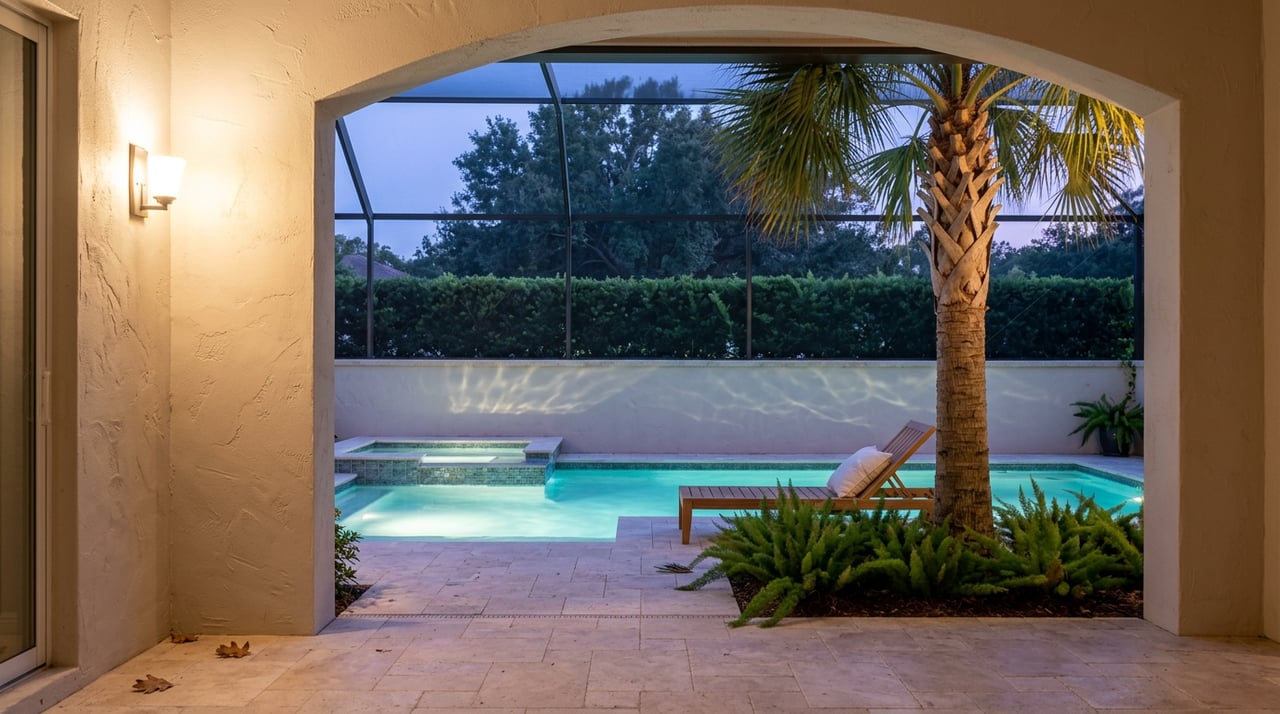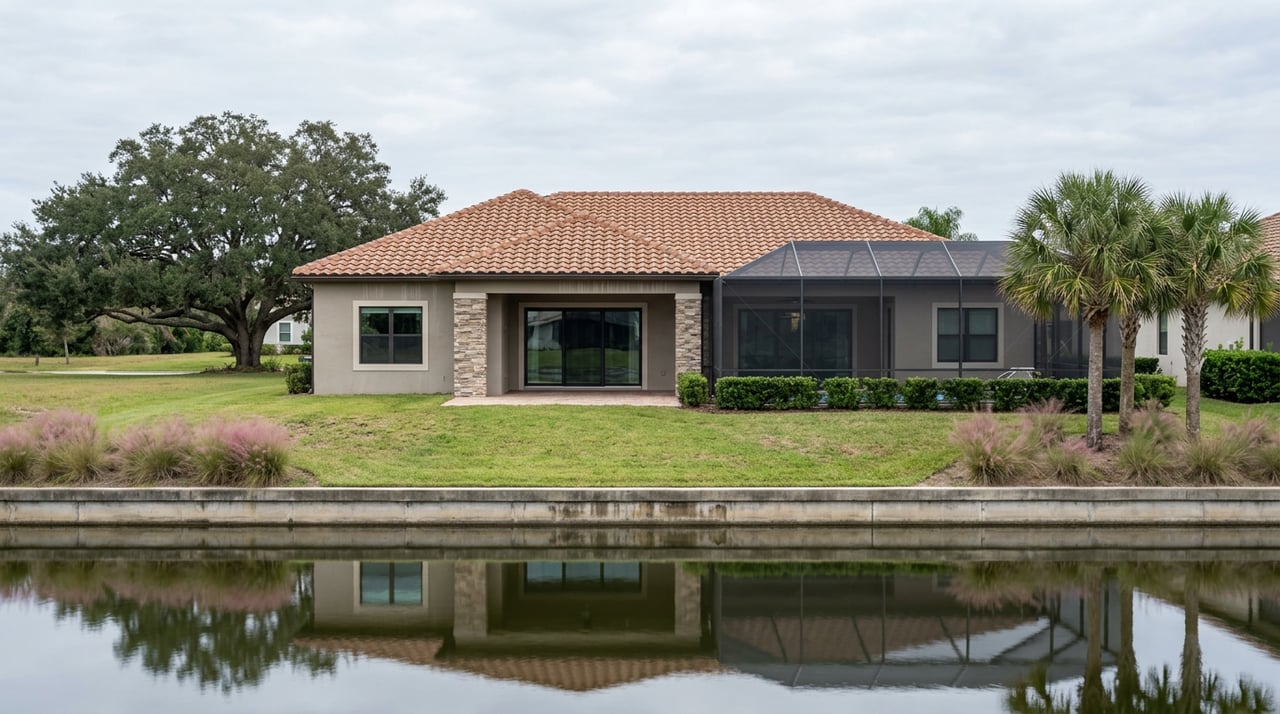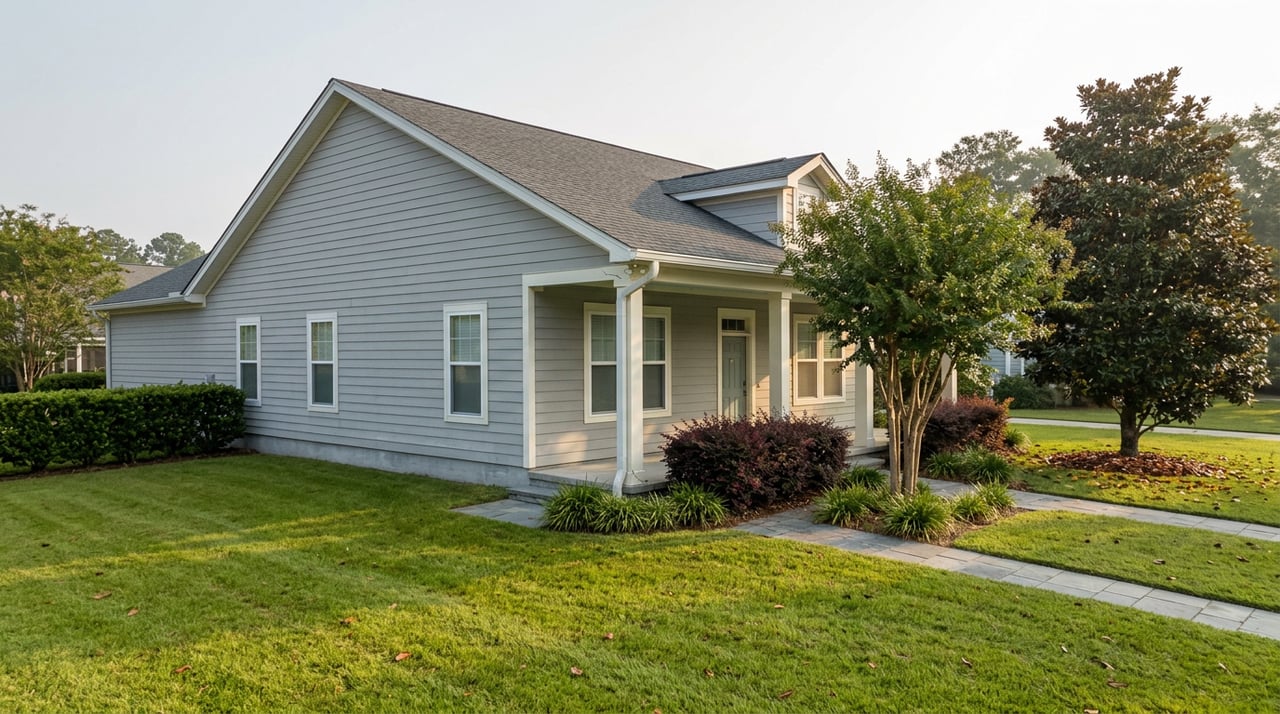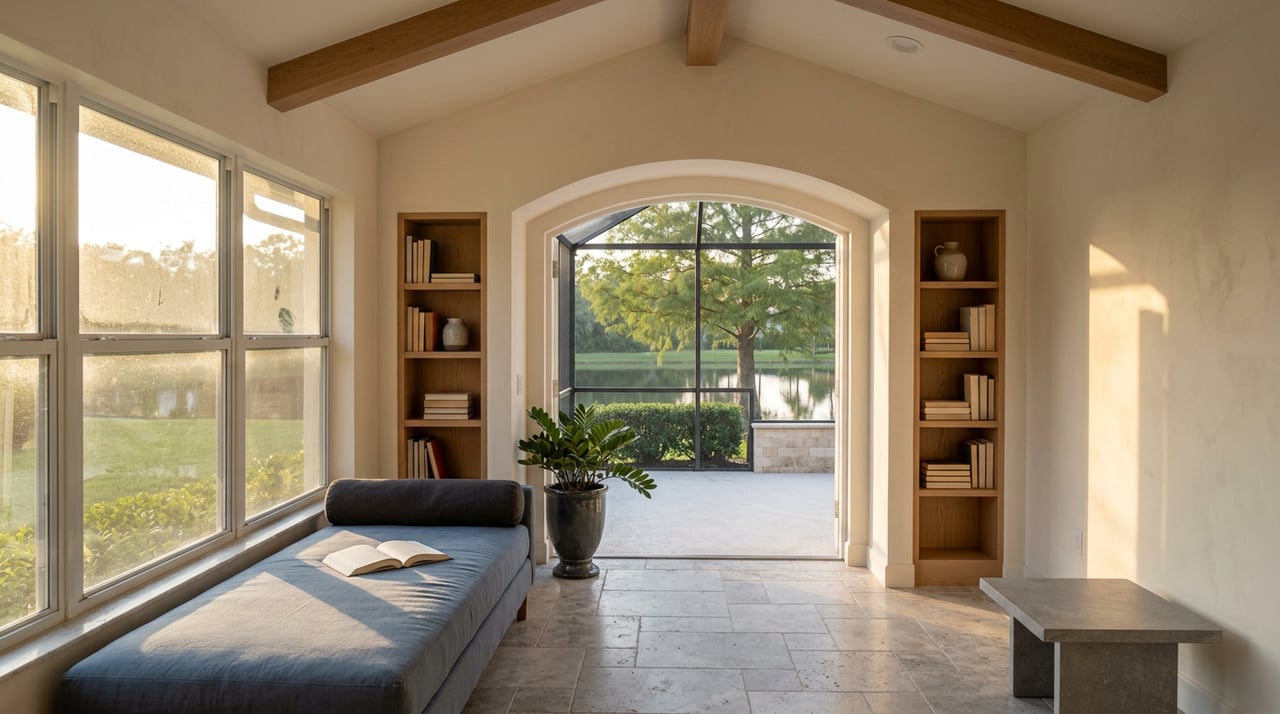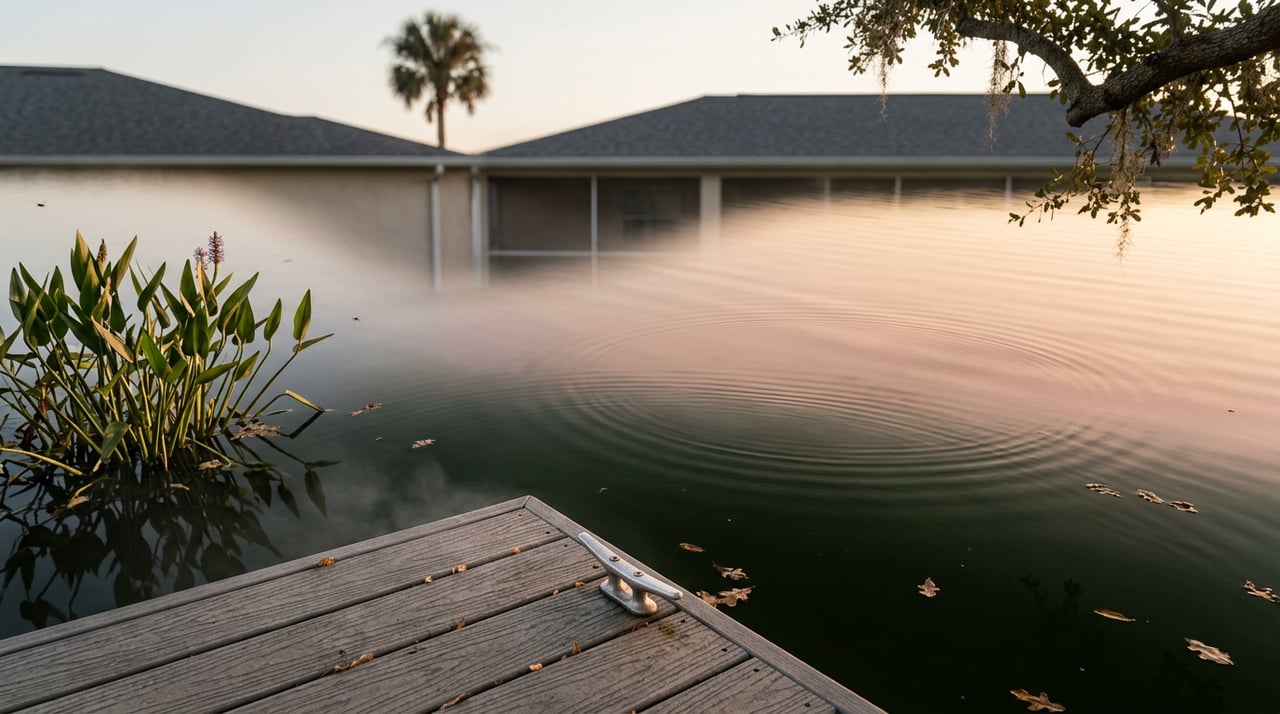
Paddle out from a dock in Lakes of Mount Dora on a weekday morning and the first thing you notice is what you don't hear. No outboard roar, no wake slapping the seawall, no jet ski cutting across the far shore. Just the small electric hum of a pontoon easing past, or the dip of a paddle, or nothing at all. That silence isn't an accident of geography. It's a rule, and it's the reason 4.5 miles of interconnected lake inside this gated 55+ community functions less like scenery and more like a second street grid, one that roughly 70 percent of the neighborhood's 950 homesites can access directly from their own backyard.
The rule is simple: no gas motors on the interior lakes. Electric boats, kayaks, canoes and catch-and-release fishing for bass and bream are permitted. Nothing louder than that. It sounds like a minor detail until you compare it to what's happening eight minutes away.
Quiet by design, not by accident
Mount Dora sits on Lake Dora, part of the Harris Chain of Lakes, a system of eight interconnected lakes covering roughly 75,000 acres with more than 30 public boat ramps according to the Florida Fish and Wildlife Conservation Commission. That's a working fishery. Bass tournaments run through it. Downtown hosts an annual Lighted Boat Parade on Lake Dora every December, with local marinas and boating outfits sponsoring the event and residents lining Grantham Point and Elizabeth Evans Park to watch decorated boats compete for best light display. It's loud in the fun way, full of engines and crowds and a fireworks finale over the water at New Year's.
None of that happens on the interior lakes at Lakes of Mount Dora, and that's the point. The gas-motor ban isn't a workaround or an oversight in the HOA documents. It's the mechanism that keeps the 178 acres of water inside the gates behaving like a quiet extension of the neighborhood rather than a satellite of the Harris Chain's louder, faster water culture just down the road. You get the lake without the churn.
What this actually lets you do
The rule sounds restrictive until you map out what it opens up instead. On the interior lakes, residents can:
- Launch an electric boat, kayak, or canoe directly from a backyard dock, no trailer or ramp required
- Fish for bass and bream under catch-and-release rules, without leaving the gates
- Travel by water to visit a neighbor, watch wildlife, or just get somewhere quieter than the road
That last one matters more than it sounds. In most 55+ communities, the sidewalk and the golf cart path are the only alternate routes to a car. Here, for the majority of the neighborhood sitting on or near water, the lake itself is a third option. Not a novelty. A workable way to move.
What happens if you're not on the water
Roughly 30 percent of homesites in Lakes of Mount Dora aren't waterfront. That's still nearly 300 homes without a private dock, and the obvious assumption is that those owners are locked out of the water culture the community sells itself on. They're not. The community maintains a small dock and slip area specifically for non-waterfront owners to keep a boat, meaning you don't need lake frontage to own a kayak or an electric pontoon here. You need a slip, and the community built one.
That detail rarely makes it into a listing description, but it's the difference between "waterfront community" as a marketing phrase and a resort amenity where roughly a third of the ownership base still gets a functional way onto the water. The HOA's flat $280 a month, up five dollars from last year, already folds in RV and boat storage alongside cable, internet, irrigation water, and clubhouse upkeep. The dock and slip system is part of the same idea: water access isn't reserved for the homes that happen to touch it.
The clubhouse sits on its own island
Here's the detail that surprises people who've lived in the community for years and still haven't pieced it together. The 18,000-square-foot Island Clubhouse, the social and fitness hub for the entire neighborhood, is surrounded by water on all four sides. It's accessible by a road bridge like any other building, but it doesn't have to be. Residents can drive a boat directly to the clubhouse instead.
That's not a footnote. It means a Tuesday afternoon at the fitness center, a billiards match, or a meeting in the ballroom can start with a boat ride instead of a car trip. It also means the community's biggest annual social gatherings play out on an island in the middle of the neighborhood's own lake system, reachable by two completely different modes of transportation depending on which one you feel like using that day.
One of those gatherings is the Lakes of Mount Dora Women's Club Holiday Bazaar, an annual event held at the clubhouse with more than 35 artisans and craftsmen selling handmade goods, alongside a silent auction, a bake sale, and refreshments. It's the kind of event that could, in theory, draw a few attendees by water and most by golf cart or car, all converging on the same island clubhouse from opposite directions.
The social layer that rides on top of the water
The bazaar is one data point in a much longer list. Lakes of Mount Dora runs on resident-organized clubs, dozens of them, covering everything from Aerobics and Bridge to a dedicated Bicycle Group, an Antique Car Club, a Travel Club, and a Tea Society. There's a singles club for residents navigating the community solo. None of these clubs require water access to join, but several of them use the lake and the clubhouse's island setting as a backdrop for how they gather.
This is where the water rule and the social calendar connect. A community with 178 acres of quiet, motor-restricted lake and a clubhouse you can reach by boat isn't just offering an amenity. It's shaping how residents actually spend a Tuesday, whether that means a paddle before breakfast, a slip-stored pontoon ride to a club meeting, or a walk over the bridge to catch the tail end of a bazaar that started with 35 vendors setting up tables at nine in the morning.
Why the rule outlasts the marketing copy
Most active-adult community listings describe water access in the same three words: fishing, boating, kayaking. Lakes of Mount Dora technically qualifies for all three, but the sentence that actually explains the experience is the one about what's not allowed. No gas motors. That single restriction is what keeps the interior lakes calm enough for a 78-year-old in a kayak and a neighbor's grandkid in a canoe to share the same stretch of water without either one worrying about a wake. It's what makes the walk to the mailbox pass a dock with an electric boat idling quietly instead of one gunning toward open water. And it's what makes the clubhouse feel like the actual center of the neighborhood rather than just another building at the end of a bridge.
If you're already living here, none of this changes your HOA statement or your closing date. But it might change how you use the four and a half miles of water sitting behind or near your own home, especially if you assumed the slip and dock system wasn't available to you, or that the only way into the Island Club was across the bridge.
If you're weighing whether this kind of daily rhythm, quiet water, a boat-accessible clubhouse, a packed roster of resident clubs, fits how you want to spend the next chapter, that's a longer conversation, and one worth having with someone who knows this specific community rather than the general 55+ category.
Scott McFadden has spent years working inside Lakes of Mount Dora and the surrounding Mount Dora market, and he's glad to walk through what a home here actually offers beyond the brochure. Let's Connect.